

When someone types your practice name into Google, they already know they want you. They are not comparison shopping. They are trying to find your phone number, your hours, or your booking page. We call this a "high intent" search.
A competitor stepping into that exact moment, paying to place their own ad above your name, is intercepting that high intent searcher. It works because Google Ads allows advertisers to bid on any keyword, including a business name that isn't their own. The competitor is counting on the small percentage of searchers clicking the first thing they see without checking whose name is on it.
While it might feel like theft, it is usually legal (except in very specific circumstances), is increasingly common, and can be overcome. Here is exactly what to do, in order.
What is brand bidding
Brand bidding is the practice of paying for ads on searches for a brand name, either your own or someone else's.
When a competitor bids on your practice name, the marketing professionals refer to it as competitor brand bidding, or conquesting. When you bid on your own name to hold the top spot, that is known as defensive brand bidding, and it is the core of the playbook below.
Before starting, confirm brand bidding
Use Google's Ad Preview and Diagnosis tool rather than searching your own practice repeatedly. You can also check the Ads Transparency Center to see every ad the competitor is running.
You are looking for two things: whether they are only bidding on your name as a keyword, or whether your practice name appears in their actual ad text. The distinction decides your options.
If they are not using your name directly:
Launch a defensive brand campaign
In Google Ads, you need to create a campaign specifically to bid on your own practice name. This sounds like paying for traffic you already own, but the economics are lopsided in your favour.
Your ad and landing page are perfectly relevant to the search, so your quality score is near maximum and your clicks cost very little. The competitor's relevance is poor, so every click costs them multiples of what you pay.
You hold the top position, they bleed budget, and most give up within a few months. Treat the spend as an insurance premium on your highest converting traffic.
When we run these types of defensive ads for clients, we monitor the competitor(s) to see when they stop their conquest. Once they stop running ads, we will also stop running defensive ads to preserve advertising budget.
Brand campaign setup
Create a new Google Ads Campaign (without guidance), and select Search Campaign:
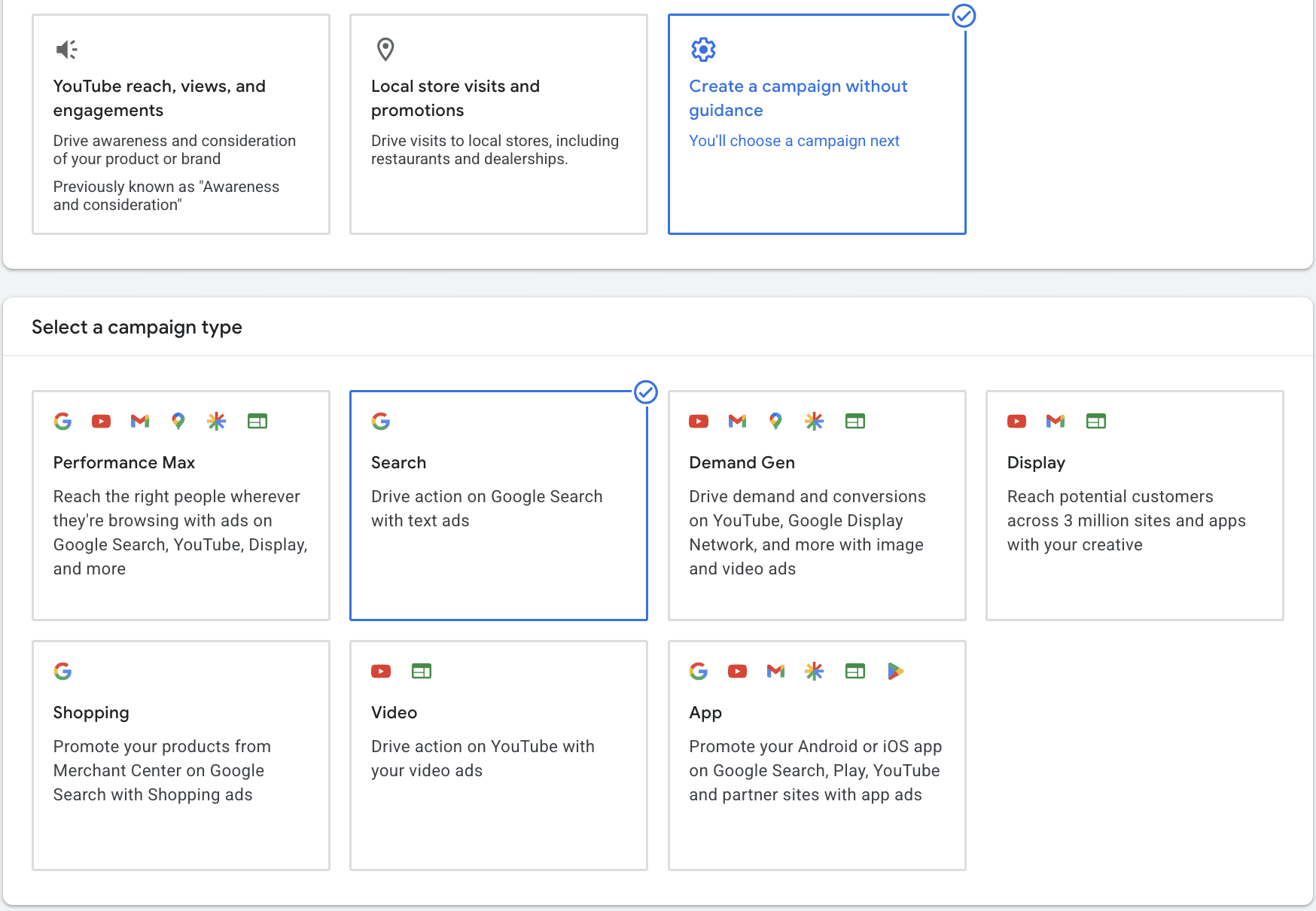
Website visits should be the goal of your campaign:

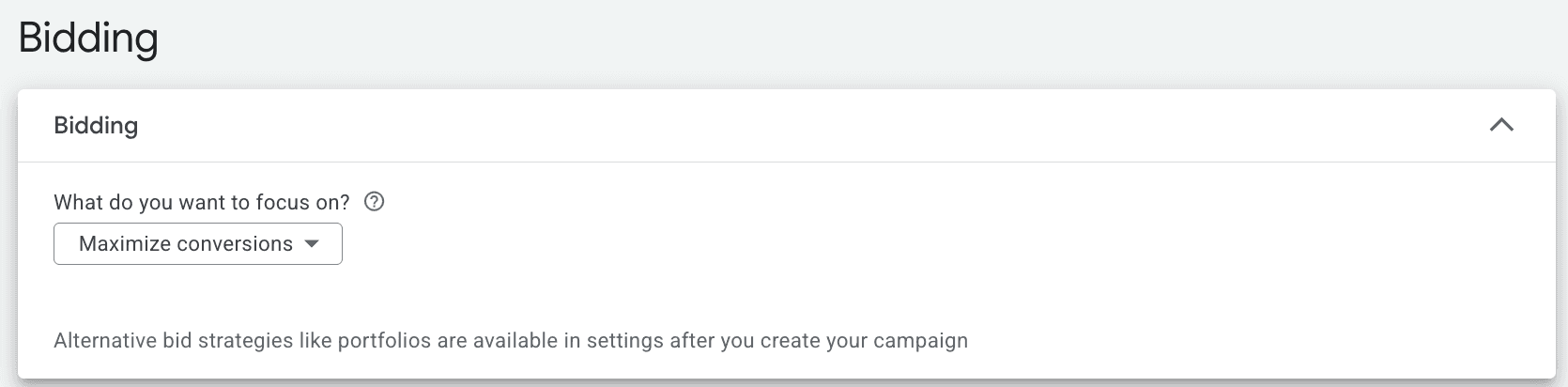
Set Bidding to Maximize conversions:
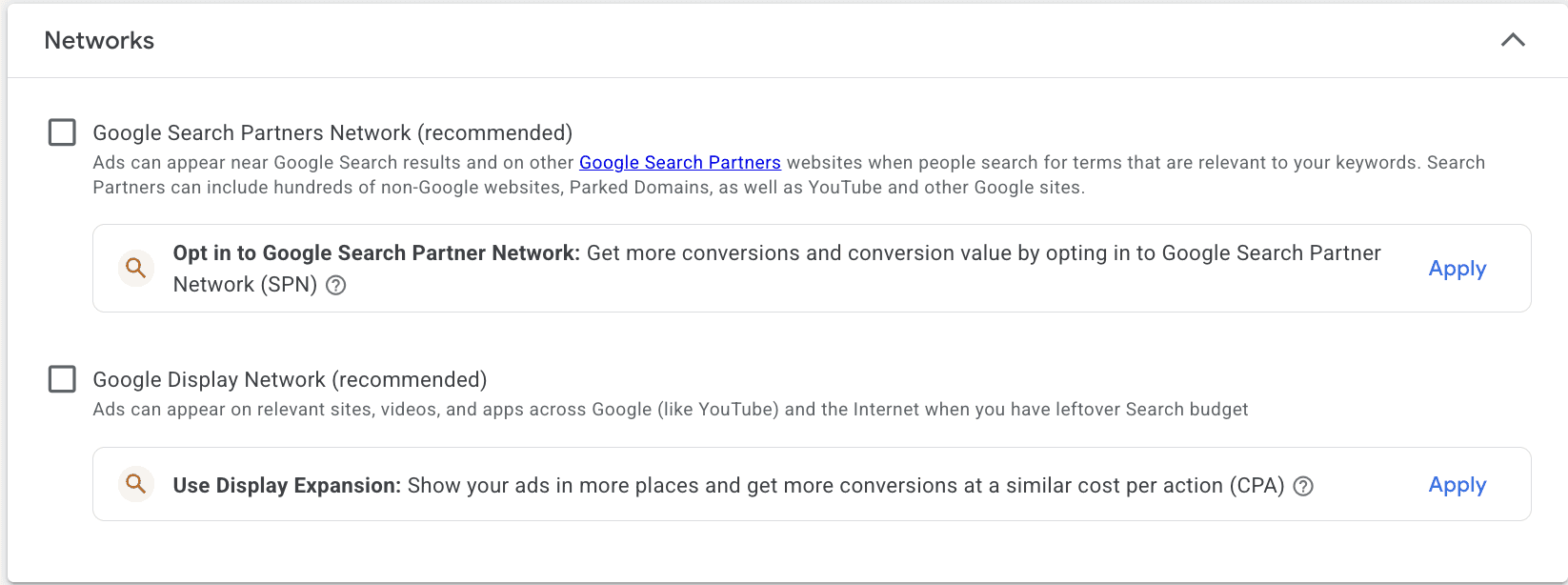
IMPORTANT — DISABLE additional networks:
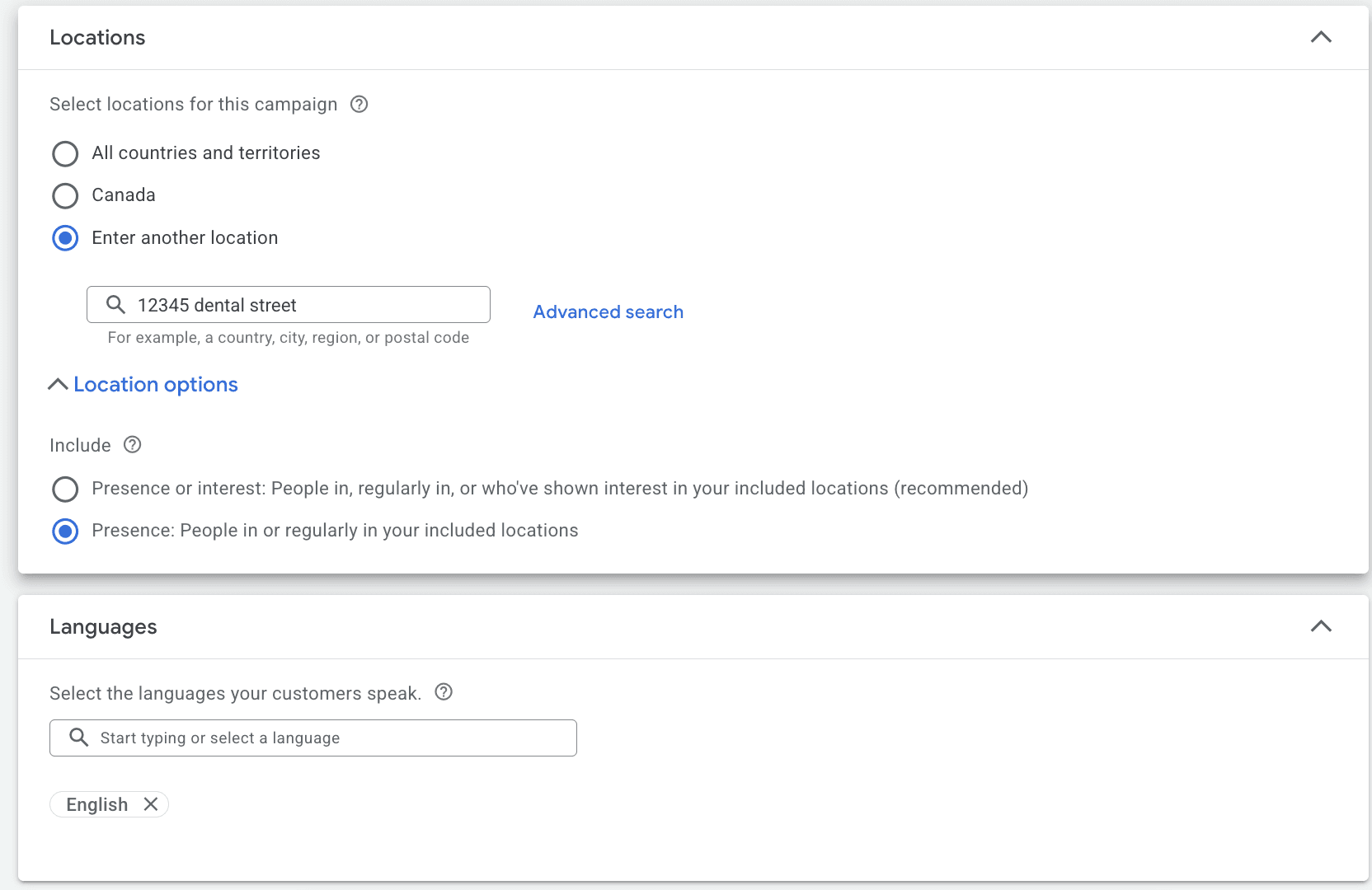
Location should be set to a radius around your practice (we do 5 km) and Presence only, then language should be your native language:
Add ONLY exact match keywords for your brand name (exact match requires square brackets around the keyword ie. "[keyword]"):
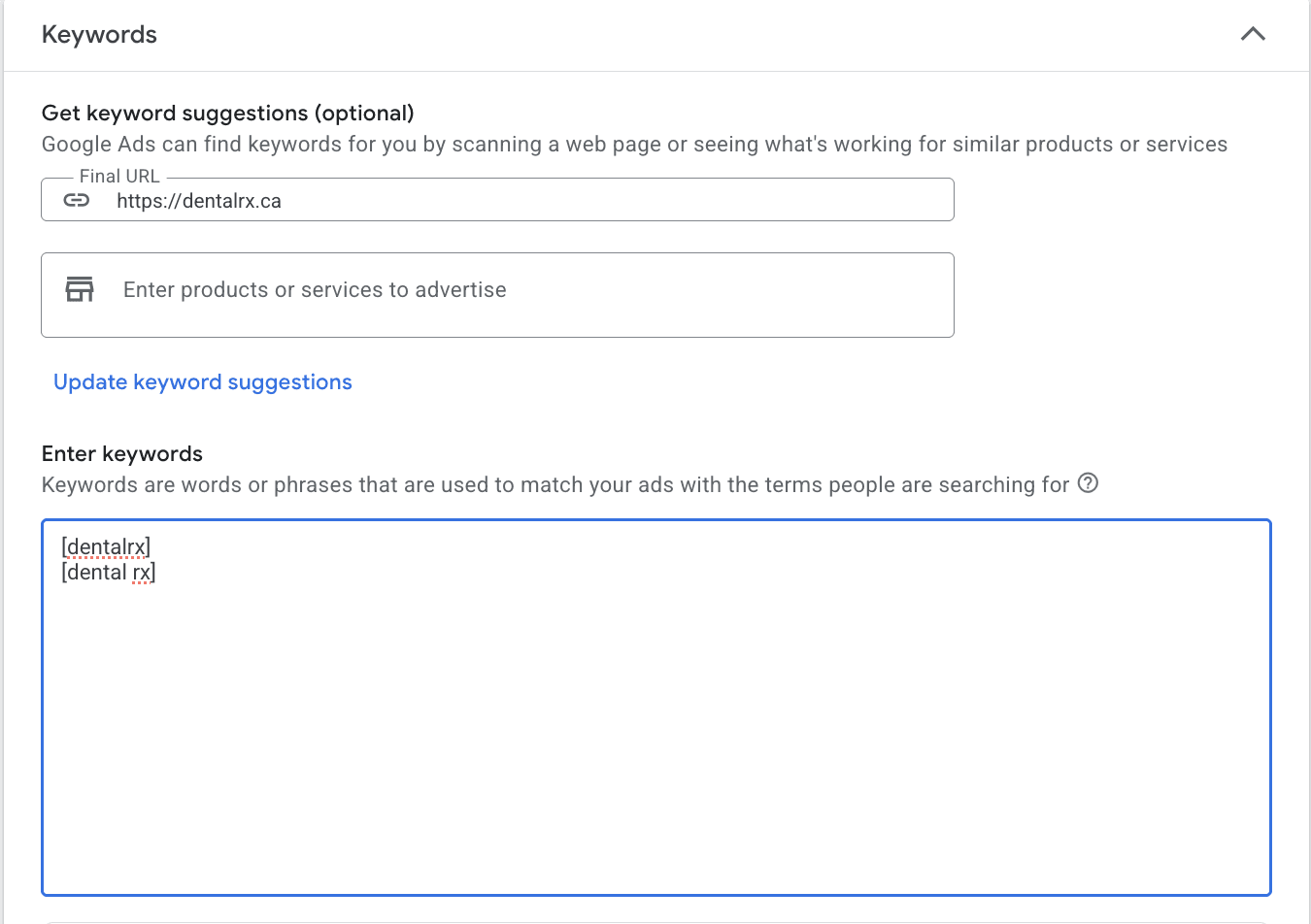
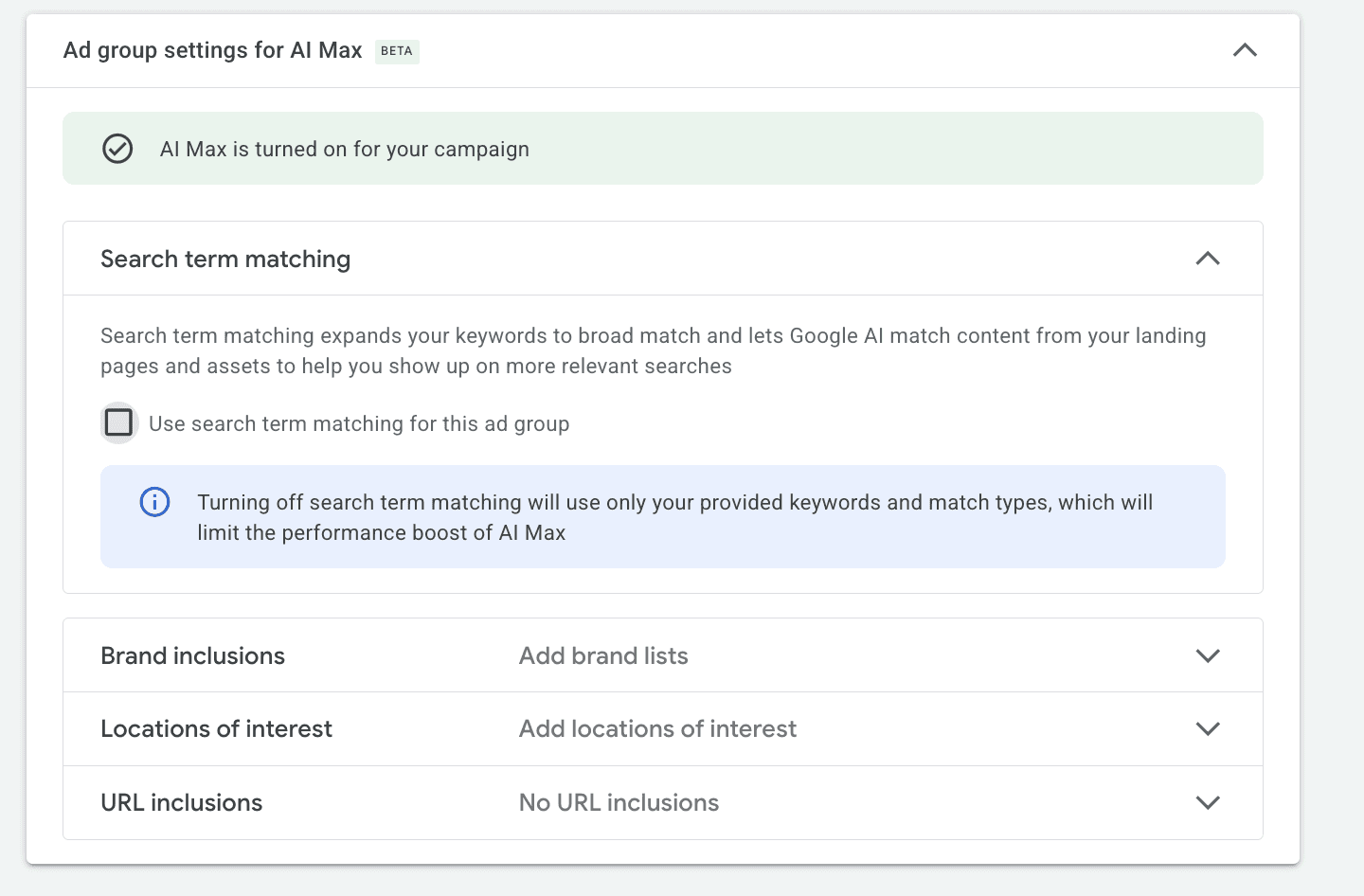
Turn OFF Search term matching:
Finally, complete your advertising copy and set an advertising budget you are comfortable with. We usually recommend at least $25/day (usually not all of it will be spent).
If they are using your exact name in their ad copy:
File a trademark complaint
Google will not stop anyone from bidding on your name as a keyword. They will however act if your trademarked name appears in a competitors' ad copy.
If your practice name is registered, file a trademark complaint through Google's form and the offending ad typically comes down.
The problematic version: near-identical practice names
Things are more complicated when the competitor shares most of your name. An example might be Northside Dental Studio and Northside Dental Centre in the same city.
A patient searches "Northside Dental", and the ad at the top decides which front desk the phone rings at. The practice that avoids the ad auction, or appears in position #2 is losing calls to their competitor.
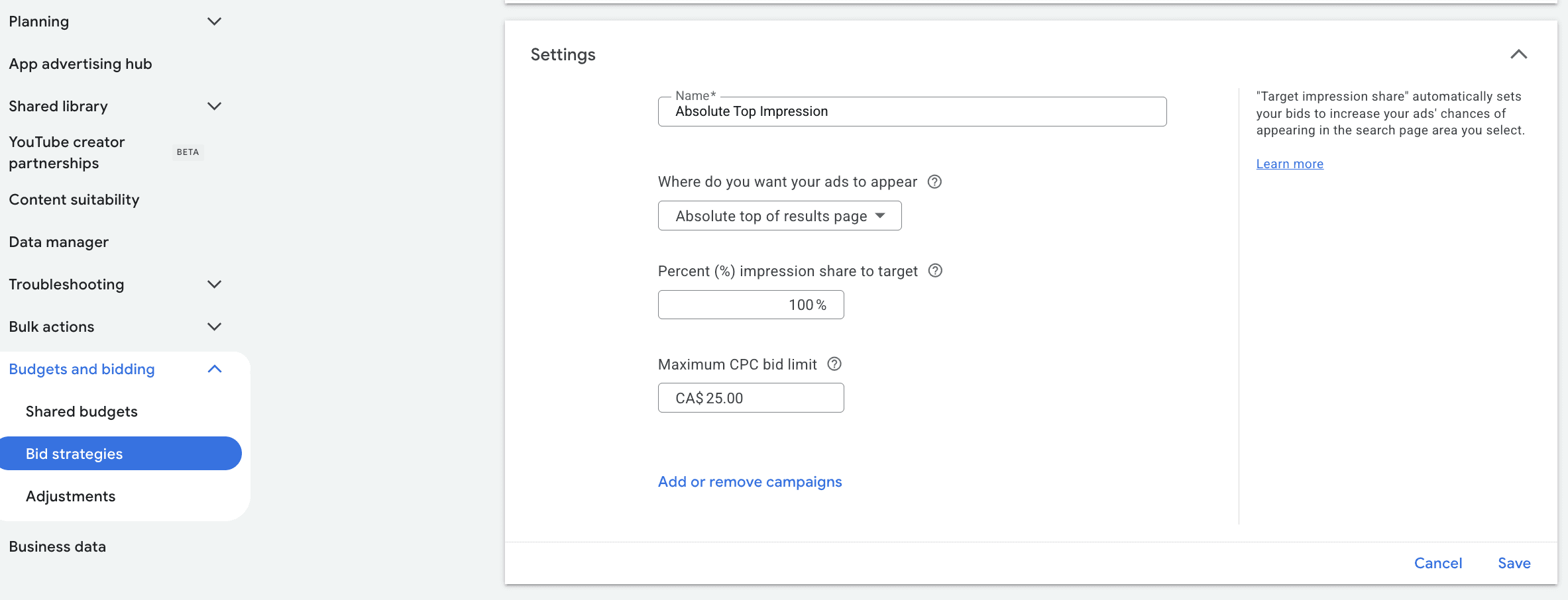
In this circumstance, you should run a defensive brand campaign with a specific bidding strategy. We define the strategy as Absolute Top Impression with the following settings:
Where do you want your ads to appear: Absolute top of results page
Percent (%) impression share to target: 100%
Maximum CPC bid limit: $25
We ran this exact defense for a client in this position: a branded campaign on the shared name, with ad copy built to separate them by neighbourhood, doctor names, and street.
Booking confusion dropped within weeks. If this is your situation, the defensive campaign is not optional.
Should you bid back on a competitor's name?
Usually no, for all the reasons covered above. Retaliation puts both practices in a paid arms race over clicks you each used to get free.
Defense on your own name is cheap. Offense on theirs is not.
The direct conversation
In small local markets, a polite call sometimes ends it, especially if you point out what their clicks are costing them.
Should you bid on your own name when nobody is attacking it?
This is a classic PPC debate in marketing circles. Skeptics point out that people searching your name would mostly click your organic listing anyway, so branded ads can pay for visits you were already getting free.
That logic holds right up until anyone else enters the auction, and in dental someone usually does. Usually this competitive bidding comes for inexperienced marketing agencies running broad campaigns, aggressive competitors, or aggregators like Opencare that bid on many dental keywords as a business model.
The test is your branded search impression share. If it sits under 90 percent, someone is already taking a cut of your name, and a small defensive budget buys it back for a fraction of what one new patient is worth.
How to know your defense is working
Watch three numbers:
search impression share on your branded terms (target above 90 percent),
top of page rate on your name, and
the recovery of your branded click-through rate in Search Console.
At DentalRx, branded coverage is part of our ads engagement when indicated. We track your impression share, top of page rate, and branded click-through weekly, and we adjust bids and negatives before a competitor gets a foothold on your name.
If you are not sure who is showing up when patients search your practice, book a branded search audit and we will show you exactly what your name looks like on page one.
Disclaimer:
This article reflects DentalRx's opinion and understanding of Google Ads brand bidding as of August 2026. Google's ad policies, trademark complaint process, auction mechanics, and reporting metrics change frequently and may have changed since publication. Nothing here is legal, financial, regulatory, or professional advice, and trademark matters in particular should be reviewed with a qualified lawyer. Results vary by practice, market, budget, and campaign execution, and no particular outcome is implied or guaranteed. Your experience may differ materially. Use your own judgment and common sense, and do what you believe is best for your practice and your patients. Verify current platform details with Google and confirm any advertising claims against your provincial regulatory college's guidelines before running campaigns. You are responsible for ensuring your advertising complies with those requirements.